
What Does Direct Concrete Slab Spot Repair Involve?
Direct slab leak spot repair is a targeted mechanical repair procedure where a plumbing technician opens a precise section of your concrete slab—typically an area measuring 18 by 18 inches—directly over the rupture coordinate confirmed by non-invasive slab leak detection.
Unlike crude exploratory demolition, surgical spot repair contains dust and debris, protects embedded post-tension foundation cables, and accesses the damaged copper line with minimal disruption to the surrounding structure. Once excavated, the defective pipe section is removed, replaced with heavy-gauge Type K copper brazed with silver-alloy solder, encased in protective polyethylene insulation, and backfilled with structural hydraulic concrete.
If your home requires professional slab leak repair in Rancho Palos Verdes, spot repair is one of the fastest ways to restore pressurized water to your residence on the same day.
Provider Credentials & Referral Transparency
Peninsula Slab Leak Co. operates as a specialized local referral service. We connect homeowners with independent licensed plumbing contractors (California C-36) who possess dedicated concrete cutting, pneumatic breakout, and high-temperature brazing equipment. All estimates, guarantees, and contracts are provided directly by the independent service company performing the physical repair.
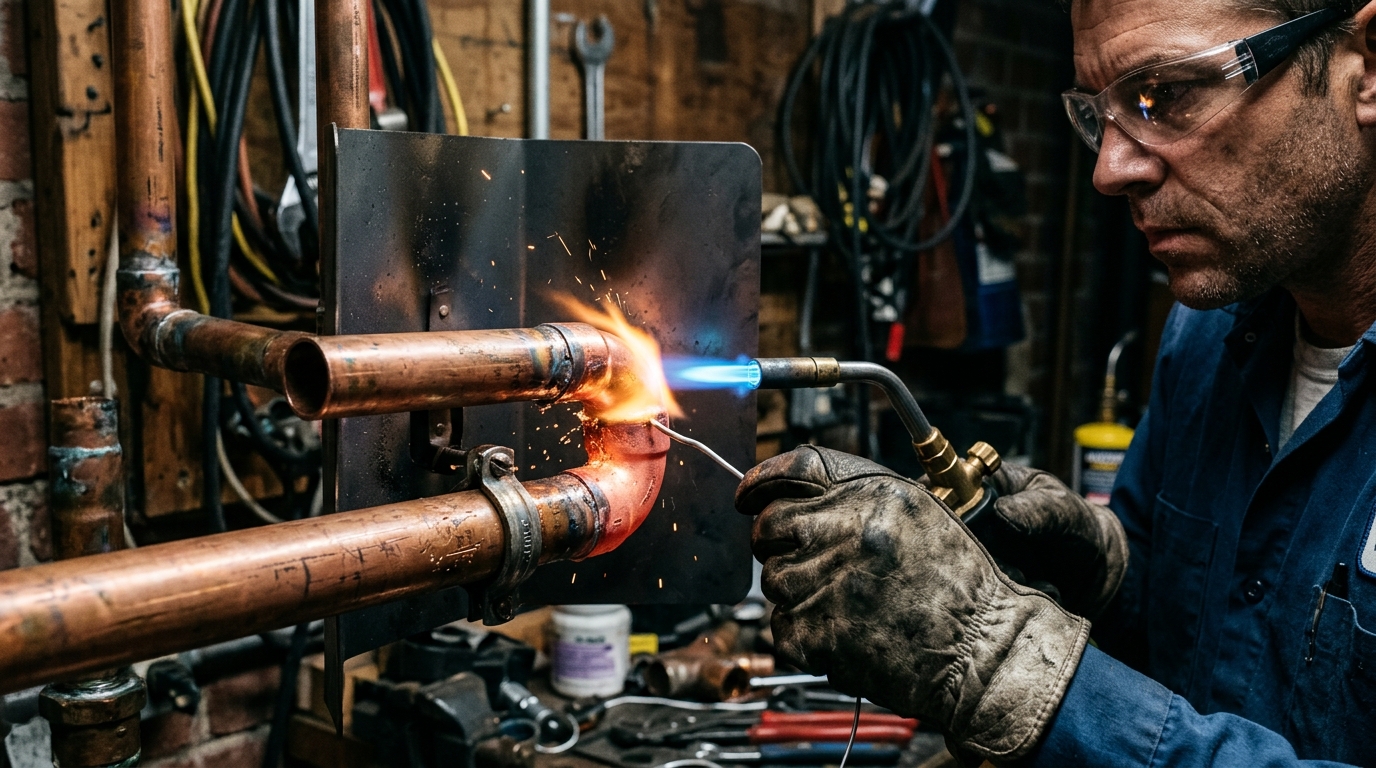
The 5-Step Surgical Spot Repair Procedure
Independent specialists in our Peninsula network execute spot repairs according to strict structural and plumbing codes:
Floor Containment
The work area is isolated using plastic dust barriers and HEPA air filtration. Flooring tiles or boards are cleanly removed.
Precision Cutout
A diamond-blade saw cuts a neat boundary through the slab, avoiding reinforcement bars and tension cables.
Sub-Base Excavation
Saturated sand and gravel are vacuum-extracted to fully expose 12–18 inches of copper pipe surrounding the pinhole.
Brazed Copper Patch
The ruptured section is cut out. A thick-walled Type K copper sleeve is silver-brazed to create a joint stronger than the original pipe.
Step 5: Sleeving, Pressure Testing & Concrete Restoration
Before closing the opening, the technician pressurizes the line to 100+ PSI to ensure an airtight seal. Crucially, a heavy polyethylene or closed-cell foam sleeve is wrapped around the copper so the metal never touches raw concrete or aggregate rock again. Finally, the opening is backfilled with compact sand and filled with high-strength structural concrete, troweled smooth flush with the subfloor.
When Should You Avoid a Spot Repair?
While spot repair is effective for isolated punctures, it is not always the best engineering solution for Peninsula homes:
- Imported or Continuous Luxury Flooring: If your home features continuous hardwood or rare Spanish pavers, matching the removed section may require re-flooring the entire floor. In this scenario, an overhead pipe reroute avoids touching the floor entirely.
- Multiple Prior Leaks: If your property has experienced a slab leak previously, the copper is experiencing systemic electrochemical degradation. Fixing one spot leaves the rest of the underground pipe ready to fail weeks or months later. In chronic situations, a whole-house repipe provides permanent protection.
- Post-Tension Slabs: Many newer homes in San Pedro and Rancho Palos Verdes utilize high-strength steel tension cables embedded in the slab. Jackhammering carries inherent risk of cable damage unless extensive radar scanning is performed.
Insurance and Cost Considerations
Most California property insurance policies cover the cost of "access and tear-out" (the concrete cutting and excavation) and secondary water restoration, but exclude the direct plumbing materials. The independent specialists we refer provide line-item invoices clearly delineating tear-out labor from pipe soldering so your insurance claim proceeds smoothly.